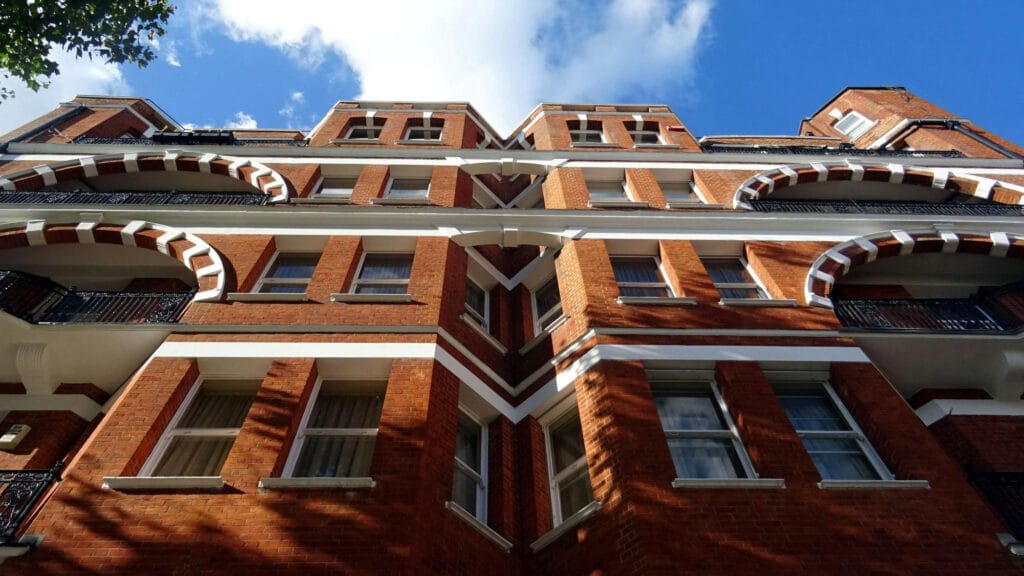

Under the Building Safety Act 2022, Fire Safety Act 2021, and the Regulatory Reform (Fire Safety) Order 2005, there is a clear and necessary focus on building safety.
Accountable Persons, Responsible Persons, managing agents, directors and freeholders all have a duty to understand the risks within their buildings and to take appropriate action.
For those living in leasehold properties, this has translated into something very visible.
If you’re involved in leasehold right now, whether you live in a block, sit on a resident board, or manage buildings day to day, you will have seen it:
- small openings drilled into facades
- cladding panels removed
- insulation exposed
- temporary patches that somehow become permanent
All done in the name of safety. And of course, safety has to come first.
But there is a growing question across the sector: What happens when intrusive surveys confirm that nothing is wrong?
Why intrusive surveys happen in the first place
Following Grenfell and the introduction of the Fire Safety Act 2021 and Building Safety Act 2022, there has been a fundamental shift in how external wall systems are assessed.
The Fire Safety Act places a legal duty on the Responsible Person to ensure that external walls (including cladding, insulation, balconies and attachments) are assessed as part of the building’s Fire Risk Assessment. Where this assessment exceeds the scope of a standard FRA, a detailed appraisal of the external wall system is required, typically undertaken through an FRAEW in accordance with PAS 9980. This assessment should be undertaken proportionately, and intrusive surveys may not be required where sufficient information is already available to determine risk.
The Building Safety Act applies to higher-risk buildings (typically those over 18m or 7 storeys) and requires duty holders to demonstrate a clear and evidence-based understanding of building safety risks through the Golden Thread and Safety Case requirements. This includes a detailed understanding of the external wall system, which must be verified by competent professionals, such as qualified fire engineers or building surveyors.
Intrusive investigations are therefore carried out to obtain this information. They allow professionals to verify the actual construction of the façade, including materials, cavity barriers, fixings and fire stopping — elements that cannot be confirmed through visual inspection alone.
Intrusive surveys are undertaken to:
- Establish the actual build-up of the external wall system
- Confirm the presence and adequacy of fire safety measures
- Provide the evidence required to support an FRAEW and demonstrate compliance with legislative requirements
They also form part of the evidence base for EWS1 forms, which are not a legal requirement but are typically required by lenders and insurers to support valuation and lending decisions.
The reality on site
Across the country, a pattern is starting to emerge. Buildings are being opened up and left with:
- mismatched repairs
- visible patchwork across facades
- poorly reinstated finishes
- temporary fixes that quietly become permanent
And in some cases, no remediation works are actually required. So, the building has been disturbed, altered and, in many cases, visually compromised, without any underlying issue needing to be fixed.
From a managing agent’s perspective, this creates a difficult balance.
You are trying to meet:
- safety and compliance obligations
- lender and valuer expectations
- insurance requirements
- resident confidence
At the same time, you are responsible for protecting the building as an asset.
Because once a building has been opened up, it is not always straightforward to put it back exactly as it was.
And this can, quite rightly, cause tension for freeholders and leaseholders alike.
Let’s talk about insurance
There is often an assumption that intrusive surveys are “required”, but it is more nuanced than that.
External wall reviews are not a legal requirement in themselves. They are often driven by risk perception across lenders, insurers and the wider market.
Insurers, in particular, may request further investigation where there is uncertainty around materials or fire spread risk.
That can lead to a cautious approach:
“Let’s open it up, just to be sure.”
This is understandable, but not always productive.
How do leaseholders actually feel?
For residents, we have to remember that we are dealing with their home and we often hear things like:
- “Our building looks worse than it did before.”
- “It feels like we’re living on a building site.”
- “We were told this was necessary.”
- “Who is going to fix it properly?”
And underneath that, there is something more fundamental:
- a loss of pride in where they live
- a loss of confidence in those making decisions
- and, in some cases, concern about value and saleability
This links closely to wider challenges we see across leasehold, particularly where communication and decision-making don’t always align with resident expectations. We’ve explored similar resident concerns in our article on managing differing opinions in resident boards.
Could this be done better?
The intention behind intrusive surveys is right.
But the way they are being applied does not always feel proportionate, and there is space for a more balanced, considered approach.
Questions worth asking include:
- Was the survey genuinely necessary?
- Were less invasive options considered first?
- Was reinstatement clearly planned and specified?
- Who is responsible for ensuring the building is returned to an acceptable standard?
Because once the damage is done, it is often very visible and not always easily undone.
Could this be done better?
This is where technical expertise and attention to detail really matters.
One of the key issues raised across the sector has been the quality of reinstatement following intrusive investigations. Traditionally, standard aluminium plates have been used to cover openings, often leaving a finish that feels obvious, low quality and out of keeping with the building itself.
In response to this, The DALA Group have taken a more considered approach.
Having listened to feedback from clients and residents, they have developed a bespoke vent plate solution designed to sit far more discreetly within the façade.

Rather than creating a visible patch, these vent plates are designed to integrate with the building:
- available in anthracite, pale grey and white to suit different façades
- designed to resemble a natural vent rather than a repair
- fitted with a solid back panel to ensure water-tightness
- delivered as a higher-quality, more façade-conscious finish as standard
Compared to traditional aluminium plates, the difference is noticeable.
And while this might feel like a small detail, it speaks to a much bigger point.
Because the impact of an intrusive survey does not end with a report. It affects how a building looks, how it is perceived, and how residents feel about where they live.
Alongside this, there remains a clear need for technical guidance around:
- when intrusive surveys are genuinely justified
- alternative, less invasive investigation methods
- best practice for opening up and reinstatement
- ensuring findings remain proportionate to actual risk
What to do if your building has been affected
If you are a director or leaseholder dealing with this, it is important to ensure that the scope, findings and outcomes of the survey have been clearly explained by the appointed professionals:
- What was the original scope of the survey?
- What were the findings, and did they justify the level of intrusion?
- Was reinstatement included, and to what standard?
- Has a proportionate approach been taken to both investigation and making good?
Where there is uncertainty, obtaining further clarification or an independent professional review can help ensure that the approach and outcomes are both technically appropriate and proportionate, particularly in relation to resident safety and the performance of the external wall construction.
The DALA Group can assist in this regard by undertaking peer reviews of FRAEW assessments, providing an additional layer of assurance where required.
There is a balance to be struck between undertaking necessary investigations and ensuring that the approach remains proportionate. Without this, there is a risk of resolving one issue while creating avoidable disruption or secondary issues elsewhere.